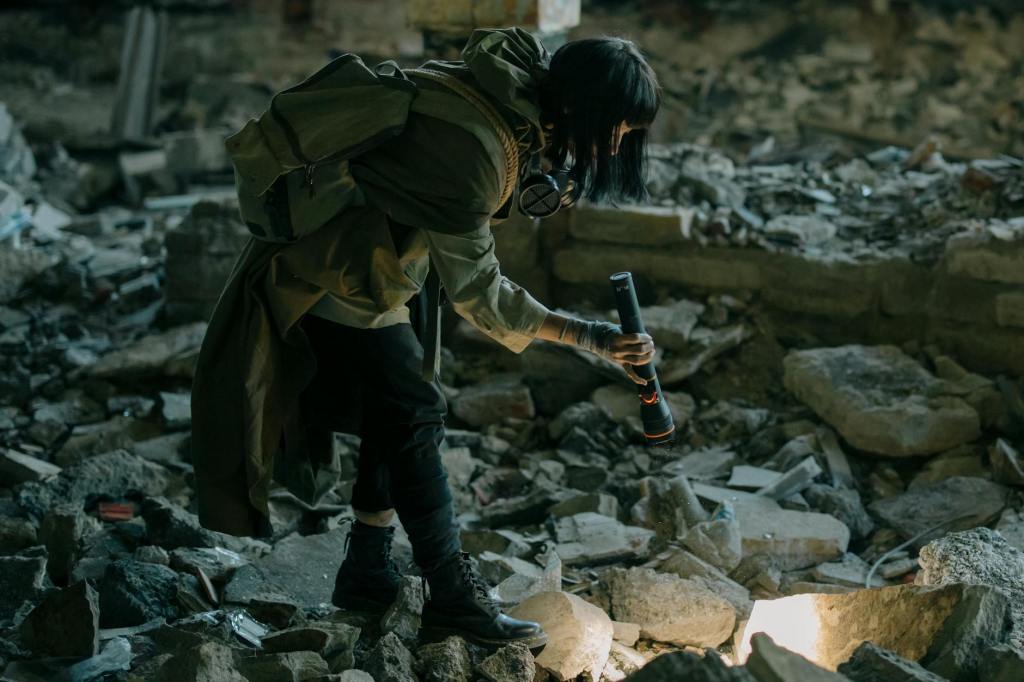
I saw a debate about this in an equestrian forum: Would horses be the best mode of transportation in dystopian post-apocalyptic worlds? I’m thinking about Mad Max, Walking Dead, Parable of the Sower type universes, where there is a significant climate or natural disaster in addition to the political and social upheaval. I wound up falling down a rabbit hole and given my background with horses and traveling around the US without a car, this is my take:
Assuming that there is no significant advancement in transportation that would allow for renewable, easily accessible fuel, vehicles would become obsolete within a few years. Gasoline must be refined in order to be used and the event of societal collapse would likely shut down refineries and drilling operations. It might be feasible at first, but not in latter stages.
Not to mention, the existence of those drilling operations and carbon emissions from burning fossil fuels would play some part in the climate disaster. So, I reduced my list to modes of transportation exclusive of gasoline or other forms of non-renewable energy.
- Bicycles. Pros: Easily accessible, cheap, and easy to maintain. Bike pumps don’t require electricity or gasoline, so tires can be maintained a lot easier than the ones on a vehicle. Most sources suggest that cross country biking averages at about 10 mph. With human walking speed at 2-4 mph and running speed at 5-8 mph, a bike can outpace hostile humans with ease and keep that pace for much longer. Additionally, bikes can carry some small amount of luggage or pull a small cart. Cons: While a bike can outpace someone on foot, they are relatively slow compared to other options and offer no cover in the event of attack. Also, you can’t use a weapon while riding a bike, as they require a lot of balance and speaking from experience, jousting or sword fighting from a bike is how you get thrown to the ground. Bikes require effort from the rider rather than the ‘vehicle’, which leads to weariness and injury, especially for people who are not physically fit. They are difficult for children, disabled people, the injured, and the elderly to use. They offer no protection from the elements and are useless in very muddy, wet, and snowy conditions. Their luggage capacity is minimal, being limited to a basket, backpack, or maybe a small cart that would slow the rider down considerably.
- Horses. Pros: If there is a true societal collapse, then all land is free for grazing and most horses would be able to live off the land. Since they are carrying the rider, it is less strain on the person in that they aren’t constantly pedaling. The rider can have at least one hand free to defend themselves if need be, and horses are usually smart enough to get themselves out of danger, so there’d be less need for the rider to be constantly focused on their ‘vehicle’. Horses walk around 4-6 mph and can maintain a trot at 7-8 mph for some distance. Top speeds can’t be maintained for a very long time, but should a rider need to get somewhere fast or skidaddle out of a bad situation, they can reach 25 mph or faster. Horses are more easily equipped with saddle bags and luggage, and can pull a lot more weight than they can carry. A team of sturdy horses can easily haul a cart and several people all day long at a slow, steady pace. They also provide warmth in cold temperatures, can traverse snow and mud, and most are fairly hardy to the elements. Children, elderly people, and those unable to actively ride a horse can easily be ponied on a gentler, quieter horse or be brought along in a cart. Horses are highly trainable and intelligent (usually) and that can work to the rider’s benefit. Sometimes. A horse can also be a food source, not that I could bear to admit that. Cons: If the climate disaster is such that there is no grass, horses and most other herbivores would starve out. Horses require rest periods to eat and drink and recover. Additionally, some horses are fragile as they are powerful and a cold breeze could cause them to keel over. They can die from having a stomach ache. If they get stuck somewhere and are unable to move or stand, they will die shortly after. If they decide that today is not their day and they are angry at the world and everything in it, they will not cooperate with a rider and the rider will likely sustain injuries or at least lose the horse in the wild. The horse may or may not come back and if the rider is injured badly enough, boom. You’re dead. Some horses require more food than others and will waste away on pasture alone, and horse feed is way too heavy to haul around from place to place unless you have a suitable cart and space to keep it, not to mention the production of horse feed will be halted in the apocalypse and you’ll have to raid every feed store you come across to get enough food to keep that horse fat and happy. Seriously, the tummy ache of death is probably the number one problem with horses as transportation. If you have a nice, sturdy mustang or ranch-type horse, a draft, or some spiteful, easy-keeper pony that refuses to die at the end of the world, you’re probably as well off as you can possibly get. My thoroughbred cross would probably die in short order while my walker would just keep on living because she gets fat on air.
- Dogs. Pros: First off, they’re dogs. Dogs are amazing for companionship, protection, etc. They are versatile and can be trained to help with numerous tasks including pulling carts and sleds. You’ll need more than one dog but they’re fairly cheap to feed and dog food is light weight. If you already have a cart, you can just throw a 40 lb bag of dog food on top and that’ll last you two months. Dog food is available everywhere. Dogs will also eat just about anything so even if you don’t have dog food, you can toss your dogs some moldy pizza and they’ll be more than happy to chow down. They evolved off the trash bin. Large dogs are hardier and stronger and with proper training and conditioning, can pull a considerable amount of weight, especially in teams. A team of dogs can travel at speeds of 5-20 mph, making them excellent for getaways and travel. Many dogs are sturdy enough to handle most weather conditions, and they can all pile on top of you to keep you and each other warm. Dogs are loyal, too, and you can expect them to stay close and be smart enough to stay out of trouble (probably). Vet care will probably be nonexistent so that eliminates those expenses, but it also contributes to the massive list of Cons: Fleas and ectoparasites galore that will want to munch on you, too. If your dogs eat something poisonous, there’s nothing you can do. If your dog eats something out of the trash bin and gets pancreatitis, there’s nothing you can do. If your dog blows its CCL, there’s nothing you can do. Dogs get in fights. They’re loud and attract attention. They might run off to go find a random dog in heat because there won’t be any vets to spay or neuter your dogs. Without access to vet care, dogs won’t live as long, and then you’ll be left with the horrible emptiness that follows losing a pet even more often than before. You’re best hope would be to stop at an abandoned vet clinic and raid their heartworm and flea control, grab some antibiotics, and hopefully find a vet to befriend who could stitch not only your dogs up, but also you. Listen: I’ve worked at a vet clinic for 7 years. Our sutures are impeccable because we do it every day.
- Boats. Pros: Why does no one ever mention boats! It’s easy to make a canoe or raft and sailboats are spacious and fast, weather permitting! As long as there’s still water around (Mad Max, looking at you), a boat will be your best option to get away from failing society, zombies, drugged-out psychos, and probably aliens, too (A Quiet Place, anyone?). They require less effort than bikes and can carry far more than any of the above-mentioned options. As long as you’re able to stock up on food beforehand, you can sit out on open water for nigh forever. Pack some vitamins to make up for the lack of fresh food and you’ll be able to wait out the end of the world. Cons: Requires knowledge of boating, which many of us lack. The weather, especially if it’s violent from a climate disaster, could capsize the whole boat. You still have to go on land to get food. You will probably go insane from being alone on a boat, but what does that matter when the world is ending, anyway?
 Three Elves in a Trenchcoat
Leave a comment